
Let’s be honest. You didn’t start your business to spend your weekends reconciling bank statements.
Whether you’re running a screen printing shop, offering consulting services, or building a one-person service empire, there’s a question that eventually keeps every solopreneur up at night: Do I actually need a bookkeeper for self-employed work, or am I just overcomplicating this?
Here’s the truth, it’s not a simple yes or no. The real answer depends on where you are in your business journey, how you value your time, and whether you want to stay stuck in data entry mode or build systems that scale.
Let’s break it down together. ✅
The DIY Reality: What Self-Employed Bookkeeping Actually Looks Like
First, let’s talk about what you’re signing up for when you handle your own books.
Self-employed bookkeeping isn’t just logging expenses into a spreadsheet once a month. It includes:
- Tracking every income source and expense
- Reconciling your bank and credit card accounts
- Categorizing transactions correctly for tax purposes
- Managing invoices and following up on late payments
- Preparing for quarterly estimated taxes
- Generating financial reports to understand your cash flow
For a screen printer juggling supply orders, custom jobs, and seasonal rushes? That’s a lot of moving pieces. For a service provider billing retainers, project fees, and expenses? Same story.
The mechanics aren’t rocket science. You can learn QuickBooks, Wave, or FreshBooks. You can watch YouTube tutorials and piece it together. Plenty of business owners do: and some even enjoy it.
But here’s where it gets tricky.

When DIY Bookkeeping Makes Sense
We’re not here to tell you that everyone needs to hire help immediately. That’s not realistic, and frankly, it’s not always necessary.
DIY bookkeeping can work well when:
- Your business model is simple (one service, predictable income)
- You have fewer than 50 transactions per month
- You genuinely have time to dedicate to it weekly
- You’re comfortable with basic accounting concepts
- Your revenue is still in the early stages
If you’re a freelance consultant billing three clients a month, you can probably handle your own books without losing sleep. The same goes for a side-hustle screen printer who’s still testing the market.
In fact, doing your own bookkeeping early on has a hidden benefit: you learn how money flows through your business. That knowledge becomes invaluable later.
But here’s the catch: most business owners don’t stay in that simple stage forever.
The Warning Signs: When Self-Employed Bookkeeping Becomes a Problem
Your business grows. Orders increase. Clients multiply. Suddenly, you’re spending Sunday afternoons hunting down receipts instead of resting or planning your next move.
Watch for these red flags:
- You’re consistently behind on reconciling accounts
- Tax season feels like a scramble every single year
- You’re unsure how much you can actually afford to pay yourself
- Cash flow surprises keep catching you off guard
- You’re avoiding looking at your financials altogether
For screen printers, this often hits when you’re juggling inventory costs, equipment purchases, and seasonal demand swings. For service providers, it’s usually when you’ve added subcontractors, multiple revenue streams, or started scaling beyond yourself.
When bookkeeping becomes a source of stress rather than clarity, it’s no longer serving you. It’s holding you back.

The Real Question: Bookkeeper vs. Strategic Advisor
Here’s where most articles get it wrong. They frame the choice as “DIY or hire a bookkeeper.”
But that’s not the full picture.
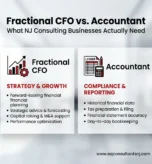
A traditional bookkeeper handles data entry. They categorize your transactions, reconcile your accounts, and keep your records tidy. That’s valuable: but it’s reactive work. They’re organizing what already happened.
A strategic advisor (sometimes called a fractional CFO) does something different. They help you understand what your numbers mean and what to do about them.
Think about it this way:
| Traditional Bookkeeper | Strategic Advisor/Fractional CFO |
|---|---|
| Records transactions | Interprets financial trends |
| Categorizes expenses | Identifies profit leaks |
| Prepares reports | Helps you plan for growth |
| Focuses on accuracy | Focuses on strategy |
If you’re a service provider wondering whether you can afford to hire your first employee, a bookkeeper can tell you your current payroll expenses. A strategic advisor can model out what that hire would cost over six months, how it affects your margins, and when you’d break even.
If you’re a screen printer deciding whether to invest in new equipment, a bookkeeper logs the purchase. A strategic advisor helps you understand whether that investment makes sense based on your cash flow projections and production capacity.
The question isn’t just “do I need a bookkeeper for self-employed work?” It’s “do I need data entry help, strategic guidance, or both?”
Moving From Data Entry to Systems
Here’s the mindset shift that separates struggling solopreneurs from thriving business owners: stop thinking about bookkeeping as a task and start thinking about it as a system.
Tasks are reactive. You do them when they pile up. They consume time and mental energy every single month.
Systems are proactive. They run in the background. They give you real-time visibility without constant effort.
What does a bookkeeping system look like?
- Automated transaction imports from your bank and credit cards
- Standardized categorization rules so you’re not reinventing the wheel every month
- Monthly financial reviews that take 15 minutes instead of 3 hours
- Dashboards showing your key numbers at a glance
- Quarterly check-ins to adjust your strategy based on actual performance
When you have systems in place, you’re not drowning in receipts during tax season. You’re not guessing whether you can afford that new hire or equipment upgrade. You’re making decisions from a place of clarity.
This is exactly what we help our clients build at Equilibrium Consultants. We don’t just do your books: we create the infrastructure that lets you run your business with confidence.

What to Look For When You’re Ready for Support
Let’s say you’ve decided it’s time to get help. What should you actually look for?
1. Industry Understanding
A bookkeeper who’s worked with screen printers knows about inventory management, cost of goods sold, and seasonal cash flow challenges. A bookkeeper familiar with service providers understands retainer billing, project-based revenue, and contractor payments. Generic bookkeeping knowledge is fine, but industry context makes a real difference.
2. Technology Proficiency
You want someone comfortable with modern tools: QuickBooks Online, cloud-based receipt capture, automated workflows. If they’re still asking you to mail paper statements, that’s a red flag.
3. Communication Style
Your bookkeeper or advisor should be able to explain your numbers in plain English. If every conversation leaves you more confused, that’s not a fit.
4. Scalability
Think about where you’ll be in two years. Do you want someone who can grow with you? A partner who starts with basic bookkeeping but can evolve into strategic advisory as your needs expand is worth their weight in gold.
5. Proactive Guidance
The best financial partners don’t just wait for you to ask questions. They spot issues before they become problems and bring opportunities to your attention.
The Bottom Line
So, do you really need a bookkeeper for self-employed work?
If your business is simple and you have the time, you can absolutely handle it yourself: at least for now. There’s value in understanding your own numbers.
But if you’re growing, if the books are causing stress, or if you’re ready to make smarter decisions faster, it’s time to consider support. And when you do, think beyond basic data entry. Think about systems. Think about strategy.
You didn’t start your business to become a full-time bookkeeper. You started it to build something meaningful: whether that’s a thriving screen printing operation, a consulting practice that gives you freedom, or a service business that actually pays you what you’re worth.
We’re here to help you get there. 🔐
Ready to move from chaos to clarity? Explore our self-employed bookkeeping services or connect with our team to see how we can build systems that work for your business( not the other way around.)