

Let’s talk about something that most self-employed business owners don’t realize they need until it’s too late: WISP compliance.
If you just thought, “What the heck is WISP?”, you’re not alone. And if you’re already feeling that pit in your stomach wondering if this is another compliance headache, take a breath. We’re going to break this down in plain English and show you why this isn’t just another regulatory box to check. It’s actually one of the smartest protective moves you can make for your business.
What Is a WISP (And Why Should You Care)?
WISP stands for Written Information Security Plan. Think of it as your business’s official playbook for protecting client data, from Social Security numbers and W-2s to banking information and tax files.
Here’s the thing: if you handle any kind of sensitive financial information (and if you’re working with a self employed bookkeeper or managing bookkeeping for self employed clients, you absolutely do), the IRS and FTC require you to have one. Not recommend. Not suggest. Require.
This isn’t optional documentation that only the big firms need. Under IRS WISP requirements outlined in Publication 4557 and the FTC Safeguards Rule, every business, regardless of size, needs a compliant plan in place. 🔐
The Secret Nobody’s Telling You
When you renew your PTIN (Preparer Tax Identification Number) each year, there’s a line on Form W-12, Line 11, where you must attest that you maintain compliant security measures.
Here’s what makes this serious: falsely claiming compliance on that form isn’t just a white lie. It’s fraud. With criminal penalties.
Most self-employed professionals we talk to have no idea this requirement exists until they’re knee-deep in bookkeeping cleanup services trying to fix things after the fact. We see it constantly, smart, capable business owners who are excellent at what they do, but who’ve been flying blind on data security compliance.
You deserve better than that kind of stress.
Why WISP Is Your Audit Defense Shield
Let’s get practical. Here’s what WISP compliance actually does for you:
It creates a documented paper trail. When auditors show up (and they do show up), they’re not just looking at your numbers. They’re examining whether you actively prevent, detect, and respond to security threats. A compliant WISP is your evidence that you’re doing exactly that.
It proves you’re not an easy target. Small businesses are perceived as soft targets by cybercriminals specifically because they assume you don’t have sophisticated protections in place. A solid WISP flips that assumption on its head.
It protects you from personal liability. Here’s the part that keeps us up at night on your behalf: officers, partners, and directors can be held personally accountable for violations, up to $10,000 per incident. Your business entity doesn’t shield you from this one.
We don’t just fix, we protect. ✅

The Real Cost of Ignoring WISP Requirements
Let’s talk numbers, because the penalty structure is severe enough to genuinely threaten your business’s survival.
Under the FTC Safeguards Rule, financial institutions can face fines up to $50,120 per day, per violation. Yes, you read that correctly. Per day.
The IRS penalty structure starts at:
- $10,000 for individuals
- $100,000 for businesses
- $43,000 in daily penalties for continued violations
And remember that personal liability piece? Directors and partners can face $10,000 per violation individually.
We’ve worked with clients who came to us after receiving notices. The panic is real. The financial exposure is real. But here’s the good news: it’s completely preventable.
If you’re currently working with a self employed bookkeeper or managing your own books, this is exactly the kind of protection that should be baked into your financial infrastructure from day one: not added as an afterthought during bookkeeping clean up services.
What Actually Goes Into a Compliant WISP
A compliant WISP isn’t a single document you download and sign. It’s a comprehensive system with three main components. We handle all of this for our clients, but here’s what’s happening behind the scenes:
Technical Safeguards
These are your digital protections:
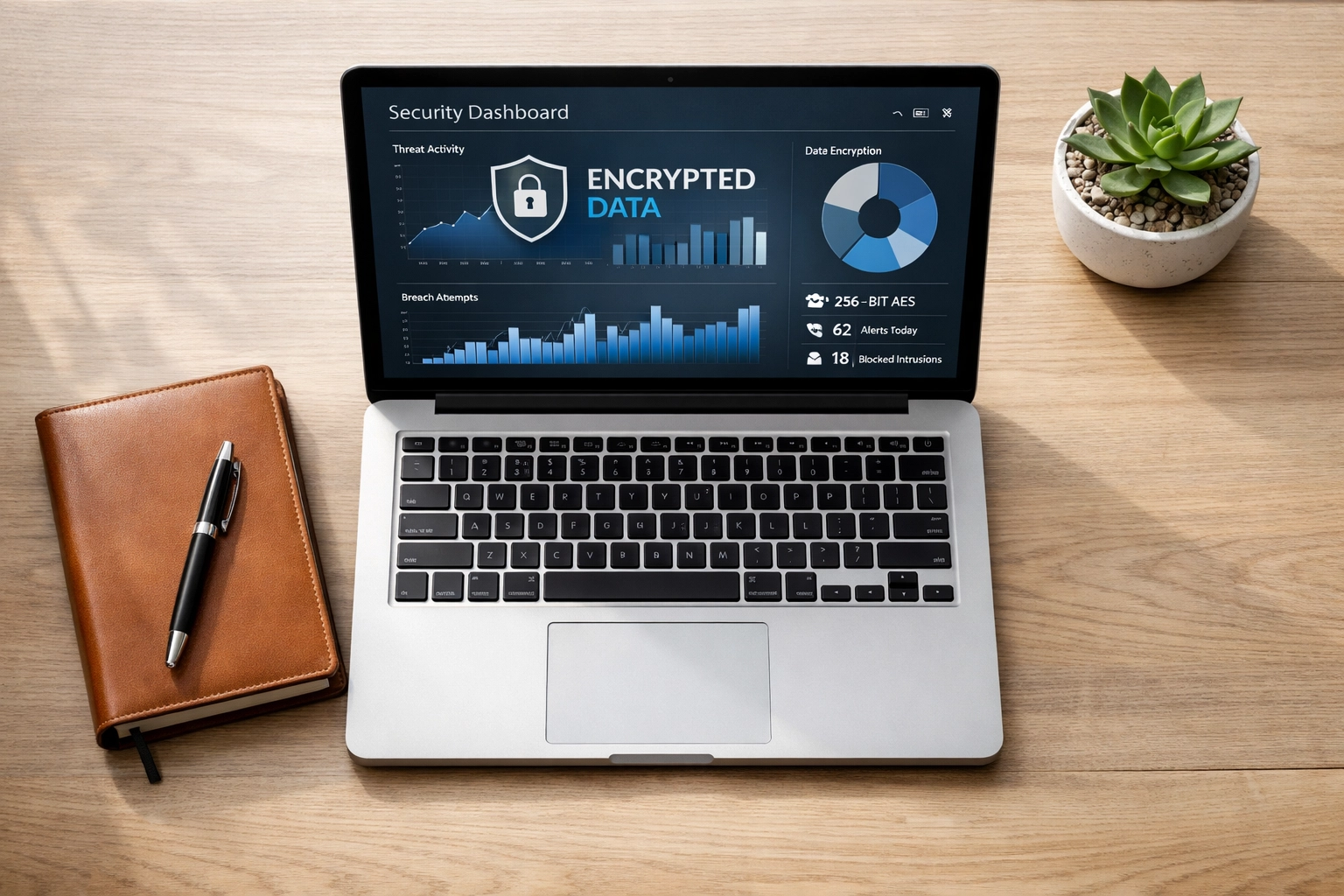
- Encryption protocols for servers, backups, and emails
- Multi-factor authentication on all systems
- Endpoint security (protecting every device that accesses your data)
- Regular backup schedules with restore testing
- Network segmentation to isolate sensitive data
- Continuous monitoring for suspicious activity
Administrative Safeguards
This is your documentation and policy framework:
- Formal information security policies with version control
- Access control procedures (who can see what, and when)
- Backup and disaster recovery protocols
- Vendor security requirements and agreements
- Incident response procedures with clear action steps
- Regular policy review schedules with approval dates
Physical Safeguards
This covers where and how data is stored or accessed:
- Physical office security measures
- Device security protocols for remote work
- Storage location documentation for sensitive files
- Visitor access controls if you have a physical office

How We Build This Into Your Bookkeeping Infrastructure
Here’s where WISP compliance becomes a competitive advantage rather than just a compliance burden.
When we work with clients on bookkeeping for self employed professionals or handle ongoing financial operations, WISP protection is built directly into our service model. You’re not paying extra for compliance: it’s part of doing business the right way.
We designate an Information Security Officer. This role gets formally documented with clear responsibilities and oversight authority. For our clients, we often serve in this capacity or work alongside your team to ensure someone with expertise is steering the ship.
We document everything. Every security measure, every policy update, every vendor agreement. If an auditor asks to see it, we hand them a organized file: not a panicked scramble.
We review and update regularly. Security isn’t static. Threats evolve. Technology changes. Your WISP needs to evolve with them, and we make sure it does.
We handle vendor compliance. If you’re using third-party software or services that touch client data, those vendors need security agreements in place. We review those agreements and ensure they meet compliance standards.
This is especially critical during bookkeeping cleanup services engagements. When we’re coming in to untangle financial chaos, we’re simultaneously ensuring that the foundation we’re building is secure from day one.
Your Next Steps Toward Audit-Proof Protection
If you’re reading this and realizing you don’t have a compliant WISP in place, don’t panic. You’re exactly where most self-employed professionals are before they work with us.
Here’s what immediate action looks like:
Step 1: Acknowledge where you are. If you don’t have a WISP, you’re not alone: but you are exposed.
Step 2: Document your current security measures. Even if they’re informal, write down what you’re already doing. That’s your starting point.
Step 3: Review any vendor or software agreements where client data is involved. You need to know who has access to what.
Step 4: Talk to someone who handles this every day. That’s us. We integrate WISP compliance into our bookkeeping for self employed services specifically so you don’t have to become a security expert on top of everything else you’re managing.

You’re in Safe Hands
Look, we get it. You became a consultant, coach, or service provider because you’re exceptional at your craft: not because you wanted to become a compliance officer.
That’s exactly why this matters. Your expertise is valuable. Your clients trust you with sensitive information. And that trust deserves protection that goes beyond good intentions.
A compliant WISP isn’t just about avoiding penalties (though that’s certainly part of it). It’s about building a business that’s resilient, professional, and audit-proof. It’s about sleeping better at night knowing that if something goes wrong, you have documented procedures to handle it.
When you work with a self employed bookkeeper who understands IRS WISP requirements, you’re not just getting cleaner books. You’re getting a partner who’s actively protecting your business from regulatory exposure.
We’ve built our entire practice around this principle: financial clarity shouldn’t come at the expense of security. They work together, or they don’t work at all.
If you’re ready to close this compliance gap and build genuine audit-proof protection into your financial infrastructure, let’s talk. We’ll review where you are, identify any immediate vulnerabilities, and create a roadmap that makes sense for your business.
Because you didn’t build your business to worry about compliance penalties. You built it to make an impact. Let’s make sure it stays protected while you do exactly that. 🚀