

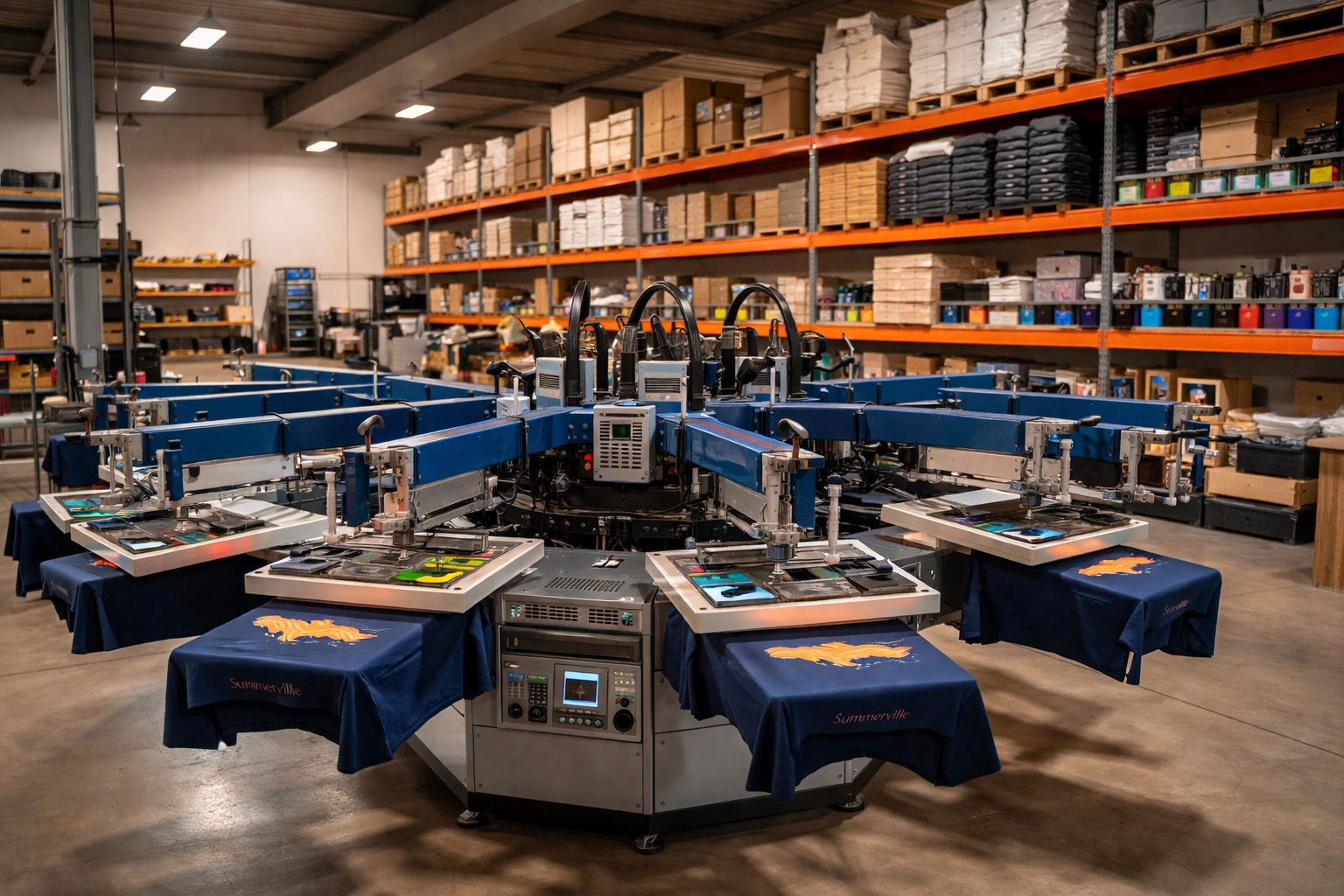
You bought the screen printing machines. You expanded into that warehouse space. You hired more hands to keep up with orders. Business is growing, on paper, anyway.
But here’s the thing: your finances feel like they’re running on broken legs.
You’ve got QuickBooks. You’re technically “doing the books.” Yet every month feels like a scramble. Cash flow is a mystery. You’re not sure if that big order actually made you money or just kept you busy. Sound familiar?
We see this all the time with screen printers and service-based shop owners. The good news? It doesn’t have to stay this way. Let’s talk about how to move from financial chaos to scalable systems, without losing your mind.
What “Broken Legs” Actually Looks Like in Your Shop
“Broken legs” isn’t just a catchy phrase. It’s what happens when your financial foundation can’t support the weight of your growing business.
Here’s how it usually shows up:
- You’re profitable on paper but constantly short on cash. Orders are rolling in, but you’re still sweating payroll every two weeks.
- Your QuickBooks is a mess. Uncategorized transactions everywhere. Bank feeds that haven’t been reconciled in months. Reports that make zero sense.
- You’re making decisions based on gut feelings. Not data. Not forecasts. Just vibes, and hope.
- Tax time is a nightmare. You hand your accountant a shoebox of receipts (metaphorically or literally) and pray for the best.
- You have no idea what your true job costs are. That 500-shirt order felt like a win, but did it actually cover ink, screens, labor, and machine time?
If you’re nodding along, you’re not alone. Most screen printing shops we work with started exactly here.

Why QuickBooks Alone Won’t Save You
Let’s be clear: QuickBooks is a powerful tool. We’re certified QuickBooks ProAdvisors, and we genuinely believe it’s one of the best platforms for small businesses.
But here’s the truth nobody tells you: QuickBooks is only as good as the person setting it up and using it.
Think of QuickBooks like a high-quality screen printing press. In the right hands, it produces crisp, consistent prints all day long. In the wrong hands? Misprints, wasted ink, and frustrated customers.
The same principle applies to your accounting software. Without proper setup, consistent processes, and someone who actually understands your business model, QuickBooks becomes just another place where numbers go to die.
Common QuickBooks Mistakes We See in Print Shops
- Chart of accounts that doesn’t match your operations. You need to track ink costs, screen costs, labor, and equipment separately, not lump everything into “supplies.”
- No job costing setup. If you can’t see profit margins per job, you’re flying blind.
- Invoices disconnected from actual production costs. You quoted $2,000, but did the job actually cost you $1,400 or $1,900?
- Bank reconciliations months behind. This is how “mystery money” happens, and disappears.
QuickBooks can absolutely support your screen printing business. But it needs to be configured for your workflow, not a generic small business template.
The Missing Piece: Advisory and Strategic Guidance
Here’s where things shift from “keeping up with the books” to “actually growing your business.”
Most shop owners think they need a bookkeeper. And yes, clean books matter. But what you really need is someone who can look at those numbers and tell you what they mean.
That’s advisory.
Advisory services go beyond data entry. We’re talking about:
- Analyzing your profit margins by job type
- Identifying which customers are actually profitable (and which ones are quietly draining you)
- Forecasting cash flow so you can plan equipment purchases or warehouse expansions
- Building pricing strategies based on real cost data, not guesswork
This is the difference between surviving and scaling.
When a Fractional CFO Makes Sense
You might be thinking, “I’m not big enough for a CFO.” And you’re probably right, you don’t need a full-time, six-figure finance executive.
But a fractional CFO? That’s a different story.
A fractional CFO gives you executive-level financial strategy without the full-time salary. Think of it as renting the expertise you need, when you need it.
Signs You’re Ready for Fractional CFO Support
✅ You’re consistently doing $500K+ in annual revenue and want to scale further
✅ You’re considering major investments, new screen printing machines, a bigger warehouse, additional staff
✅ You need help negotiating with banks or investors
✅ Your bookkeeper is great at data entry but can’t answer strategic questions
✅ You want to exit or sell your business in the next 3-5 years and need to maximize value
A fractional CFO helps you see the big picture. They translate your QuickBooks data into a roadmap for growth. They sit in on important meetings. They help you make decisions with confidence instead of crossed fingers.
Building Scalable Systems: A Practical Roadmap
Alright, let’s get tactical. Here’s how we typically help screen printing shops move from “broken legs” to solid financial footing.
Step 1: Clean Up the Mess
Before we can build anything, we need a clean foundation. That means:
- Reconciling all bank and credit card accounts
- Categorizing transactions properly
- Setting up a chart of accounts that reflects your actual operations
- Fixing (or creating) job costing structures
This isn’t glamorous work, but it’s essential. You can’t scale on shaky books.

Step 2: Establish Consistent Processes
Once the cleanup is done, we build systems that keep things clean:
- Weekly bookkeeping rhythms
- Monthly financial reviews
- Quarterly planning sessions
- Annual budgeting and forecasting
The goal is to remove you from the day-to-day financial chaos so you can focus on running your shop.
Step 3: Add Strategic Oversight
This is where advisory and fractional CFO services come in. With clean books and consistent processes, we can finally do the fun stuff:
- Profit margin analysis by job, customer, and product type
- Cash flow forecasting that accounts for seasonal swings
- Scenario planning for big decisions (Should you lease or buy that new automatic press?)
- KPI dashboards that show you what matters at a glance
Step 4: Scale with Confidence
With solid systems in place, growth becomes less scary. You’ll know:
- Exactly how much cash you need to take on a big order
- Which jobs to say yes to (and which to walk away from)
- When you can afford to hire, expand, or invest
That’s the power of moving from broken legs to scalable systems.
You Don’t Have to Figure This Out Alone
Running a screen printing shop is hard enough without also becoming a financial expert overnight.
We get it. You got into this business because you love the craft: the hum of the machines, the satisfaction of a perfect print, the relationships with your customers. Not because you dreamed of reconciling bank statements.
That’s where we come in.
At Equilibrium Consultants, we specialize in helping service-based businesses: including screen printers: build financial systems that actually work. From QuickBooks setup and optimization to virtual bookkeeping services and strategic advisory, we’ve got your back.
Ready to stop running on broken legs? Let’s talk. Reach out and tell us about your shop: we’d love to help you build something scalable. 🖨️