

Running a screen printing shop in New Jersey is a high-speed balancing act. Between managing tight turnaround times, dealing with fluctuating supply costs, and keeping your production team on track, it’s easy to feel like you’re constantly moving but not necessarily getting ahead.
If your shop is packed with orders but your bank account doesn't reflect that "busy" energy, you likely have a job costing problem.
Job costing for screen printers NJ isn't just about knowing how much a t-shirt costs; it’s about understanding every penny that leaves your shop before a single squeegee hits the mesh. At Equilibrium Consultants, we see brilliant NJ printers lose thousands in "hidden" leaks every month.
Here are the 10 reasons your job costing is failing and exactly how we can help you fix it.
1. The "Guestimation" Trap (Underquoting)
Many shop owners quote based on what the shop down the street is charging or a "gut feeling" from five years ago. In the current NJ market, materials and overhead have shifted drastically. If you are still using a flat rate that hasn't been audited in twelve months, you’re likely underquoting your most complex jobs.
The Fix: We help you move from "guessing" to "knowing." By implementing a Backend Financial Structure, we ensure your quotes are based on your actual overhead, not your competitor’s pricing.
2. The Labor Leak: Uncounted Shop Floor Time
Labor is your most expensive variable. If your team spent two hours reclaiming screens and setting up a 6-color job, but you only billed for the "print time," you’ve lost money. Most bookkeeping for screen printers fails because it doesn't account for the "non-printing" labor hours that eat into your margins.
The Fix: Use shop floor data collection. Whether it’s digital or a highly disciplined manual log, tracking every minute spent on a specific job ID is the only way to see if that "quick" job actually cost you $200 in labor.

3. Ignoring the "Invisible" Ink and Consumables
You know the cost of the garment, but what about the ink? What about the emulsion, the tape, the cleaning chemicals, and the screen mesh? Many printers treat these as general overhead, but for specialty hits like puff ink or high-density prints, the cost per garment can skyrocket.
The Fix: Assign a "consumable surcharge" to specific print types. We help you use The Profit Detector to identify which jobs are secretly draining your supply budget.
4. Miscalculating the BHR (Budgeted Hourly Rate)
Your Budgeted Hourly Rate is the "magic number" that tells you what it costs to keep your lights on every hour. It includes rent, insurance, equipment leases, and administrative salaries. If your BHR is calculated incorrectly, every job you run is based on a flawed foundation.
The Fix: This is where professional financial advisory comes in. We calculate a precise BHR for each cost center (manual press vs. automatic vs. embroidery) so your pricing is rooted in reality.
You’re in Safe Hands: we handle the math so you can handle the mesh. ✅
5. The Flash-Cure Energy Spike
New Jersey electricity isn't cheap. If you’re running multiple automatic presses and high-heat dryers all day, your utility bill is a direct production cost. If your job costing doesn't factor in the energy-heavy nature of certain jobs (like heavy fleece that requires longer dryer times), your margins are shrinking.
The Fix: Allocate utility costs based on machine run-time. It sounds complex, but once the system is set up, it’s a game-changer for your bottom line.
6. The Change-Order Black Hole
A client calls and wants to change a 3-color print to a 4-color print mid-production. Or maybe they "just want to add 10 more shirts" after the screens have been broken down. If these changes aren't tracked and billed, you are essentially giving away free labor and materials.
The Fix: Implement a strict change-order process. Every adjustment must be logged in your management software and reflected in the final invoice. If it isn't tracked, it isn't billed.
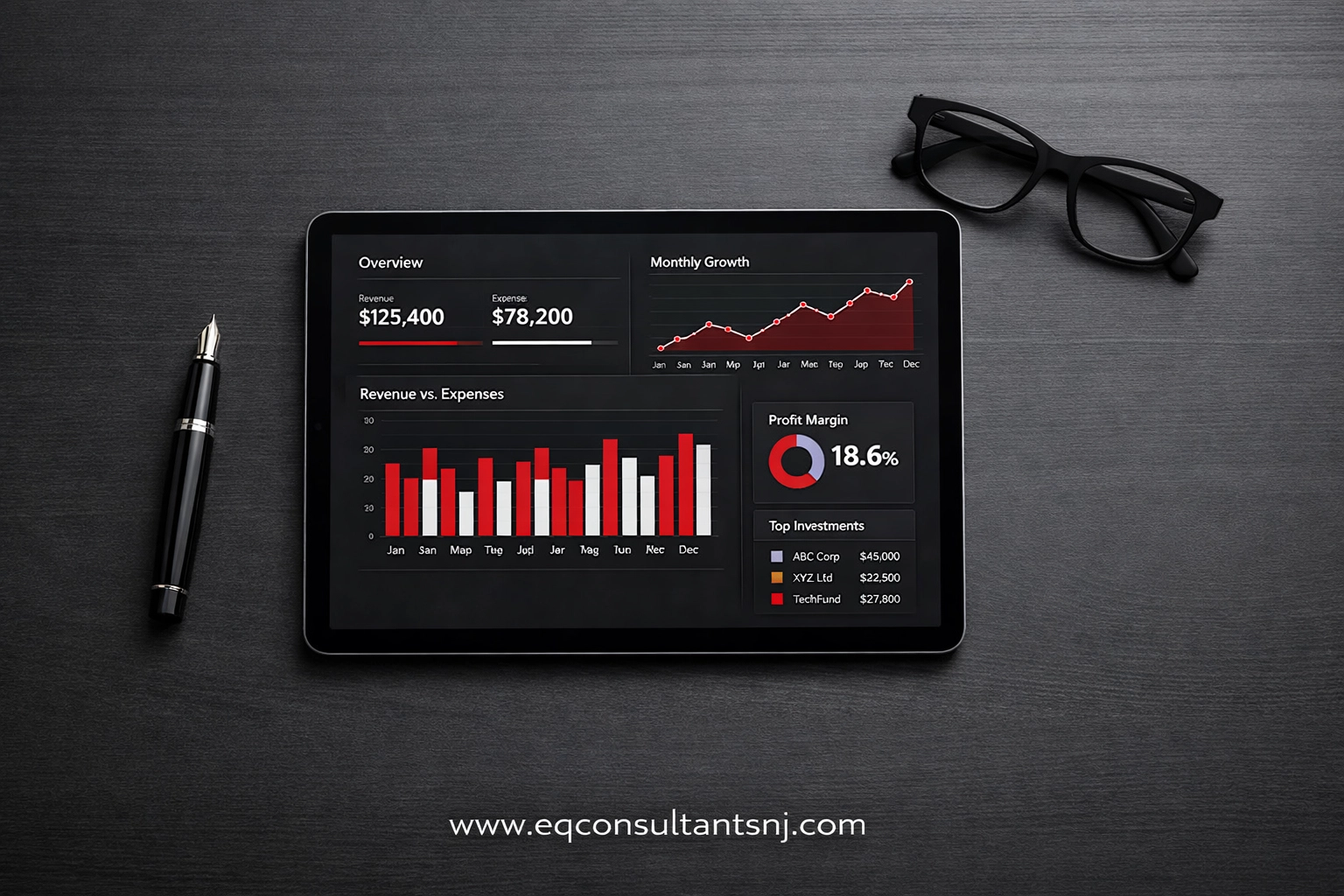 A modern tablet showing a financial dashboard with green and red growth indicators, representing real-time profit tracking.
7. Manual Data Entry Errors (The Spreadsheet Nightmare)
If you’re still running your NJ print shop on a series of disconnected Excel sheets, errors are inevitable. A typo in a formula or a forgotten line item can make a profitable job look like a loss: or worse, make a loss-making job look like a win.
The Fix: Automation is your best friend. We specialize in Quality Bookkeeping that integrates your shop management software with your accounting platform, reducing human error to near zero.
8. Lack of Real-Time Reporting
If you only look at your profit and loss statement at the end of the quarter, it’s too late. You can’t fix a job that was printed three months ago. You need to know today if your jobs yesterday were profitable.
The Fix: We provide regular financial snapshots. By using tools like the Cashflow Mini-Audit, we catch red flags before they become disasters.
9. Mixing Personal and Business Finances
This is a common hurdle for NJ solopreneurs and family-owned shops. When the business debit card is used for a quick lunch or a personal gas station run, your job costing data gets "noisy." It becomes impossible to tell what the shop actually costs to run.
The Fix: Complete separation and clean records. If your books are a bit of a mess, our Catchup & Cleanup Bookkeeping service can get you back to a clean slate. 🔐
10. Scaling Without a Map
Growing your shop is exciting, but scaling without accurate job costing is dangerous. Taking on a massive 5,000-piece contract might seem like a win, but if your margins are off by just $0.50 per shirt, you could lose $2,500 on a single order.
The Fix: Before you scale, you need a Financial Advisory and Fractional CFO. We help you model the "what-ifs" so you only take on the big jobs that actually build your wealth.
How Equilibrium Consultants Fixes Your Margins
We don't just "do the books." We partner with New Jersey print shops to turn their financial data into a competitive advantage. Bookkeeping for screen printers requires a deep understanding of the unique workflow of a print shop: from screen prep to shipping.
Our approach is simple:
- Identify the Leaks: We find exactly where your labor and materials are disappearing.
- Standardize the System: We set up a repeatable process for tracking costs.
- Analyze and Adjust: We meet with you to review the numbers and adjust your pricing strategy.
We don't just fix : we improve. 📧
Ready to Stop Guessing and Start Growing?
If you're tired of working 60-hour weeks only to wonder where the profit went, it's time to get a handle on your job costing. Let’s clean up your records and build a financial structure that supports your growth.
We love working with inspiring NJ business owners like you. Whether you're a boutique shop in Montclair or a high-volume facility in Newark, we want to hear your story and help you reach your goals.
Book Your EQ Meetup Here to Get Started
Explore our resources to help your shop stay on track:
- Want to see where your money is hiding? Try The Profit Detector.
- Need a quick look at your numbers? Grab our Small Business Bookkeeping Tracker.
- Ready for professional oversight? Check out our Financial Advisory services.
At Equilibrium Consultants, we’re more than just accountants: we’re your partners in operational excellence. Let's get your margins where they belong.